SAP Automation & Hyperautomation Explained: A Complete Guide for Businesses
Understanding SAP Automation in Modern Enterprises
In today’s fast-paced digital economy, businesses are constantly searching for ways to reduce manual effort, improve efficiency, and make faster decisions. This is where SAP Automation plays a crucial role. SAP automation refers to the use of technologies that automatically execute repetitive tasks, workflows, and data processes within SAP systems. Instead of employees spending hours on manual data entry, approvals, or reporting, automated systems handle these operations with greater speed and accuracy.
For organizations running complex enterprise environments such as finance, procurement, HR, or supply chain, automation within SAP can significantly streamline daily operations. Tasks like invoice processing, purchase order creation, or employee onboarding often involve multiple steps across different systems. With automation in place, these tasks follow predefined rules and workflows, reducing errors and delays. According to SAP resources, business process automation improves efficiency by handling repetitive tasks and integrating workflows across systems, allowing employees to focus on higher-value work.
Beyond efficiency, automation also helps maintain data consistency and compliance. When processes are automated, they follow standardized logic, making it easier to track activities and generate accurate reports. Companies adopting SAP automation often see faster cycle times, improved productivity, and better operational transparency. In simple terms, automation transforms SAP from just an enterprise software system into a powerful engine that drives smarter, faster business operations.
What is SAP Hyperautomation?
While basic automation focuses on individual tasks or workflows, SAP Hyperautomation takes things much further. Hyperautomation is a strategic way to automate as many business processes as possible by using a number of technologies together, like robotic process automation (RPA), artificial intelligence (AI), machine learning, and low-code development.
The key idea behind hyperautomation is not just automating isolated tasks but creating end-to-end automated workflows across the entire enterprise. For instance, the process of taking a customer order might include sales, managing inventory, shipping, and billing. Hyperautomation links these steps together to form a single automated system where data moves smoothly from one stage to the next.
This approach allows organizations to move toward what many experts call the “autonomous enterprise.” Instead of relying heavily on manual intervention, processes become self-running, intelligent, and continuously optimized. Hyperautomation platforms can even analyze data to identify new opportunities for automation, helping businesses constantly improve efficiency.
For companies running SAP environments, hyperautomation brings enormous advantages. By integrating automation tools with SAP applications, businesses can eliminate repetitive tasks, accelerate workflows, and improve decision-making through real-time insights. It also enables organizations to scale operations quickly without increasing operational complexity.
The Role of SAP Process Automation
Another key concept businesses should understand is SAP Process Automation. This refers to the automation of structured workflows and business processes within SAP systems. It focuses on automating step-by-step processes that involve rules, approvals, or system interactions.
SAP Process Automation solutions—such as low-code automation tools—allow organizations to design workflows visually and automate them without heavy coding. This makes automation accessible not only to developers but also to business users who understand operational processes. Modern SAP automation platforms combine workflow management, robotic automation, and business rules in a single environment, enabling companies to automate complex processes more efficiently.
For instance, imagine an employee expense approval process. Traditionally, it might involve sending emails, checking spreadsheets, and manually approving requests. With SAP process automation, the workflow can be fully digitized: employees submit expenses through a portal, approvals are routed automatically to managers, and the finance team receives validated data directly in the SAP system.
This level of automation reduces administrative workload while ensuring faster processing and improved accuracy. Over time, organizations can build a library of automated workflows covering multiple departments, from HR onboarding to procurement approvals.
Key Benefits of SAP Automation and Hyperautomation
Businesses investing in SAP Automation, SAP Hyperautomation, and SAP Process Automation often experience significant improvements across multiple areas of operations.
One of the most obvious benefits is that people get more done. Automated workflows do tasks right away and every time, getting rid of the delays that come with manual processing. This lets teams focus on big-picture goals instead of day-to-day tasks.
Better accuracy is another big benefit. Businesses can lose a lot of money because of mistakes made by people when entering data or doing manual work. Automation follows predefined rules, ensuring consistent and reliable outcomes every time a process runs.
Cost efficiency is also a major driver of automation adoption. By reducing manual workload and optimizing processes, organizations can operate with fewer resources while maintaining higher levels of output. Automation also improves compliance and audit readiness because digital workflows generate traceable records for every action performed within the system.
Finally, hyperautomation enhances business agility. Companies can quickly adapt processes when market conditions change, deploy new workflows faster, and integrate new technologies without disrupting existing operations. In a competitive business landscape, this agility can become a critical differentiator.
Real-World Business Use Cases
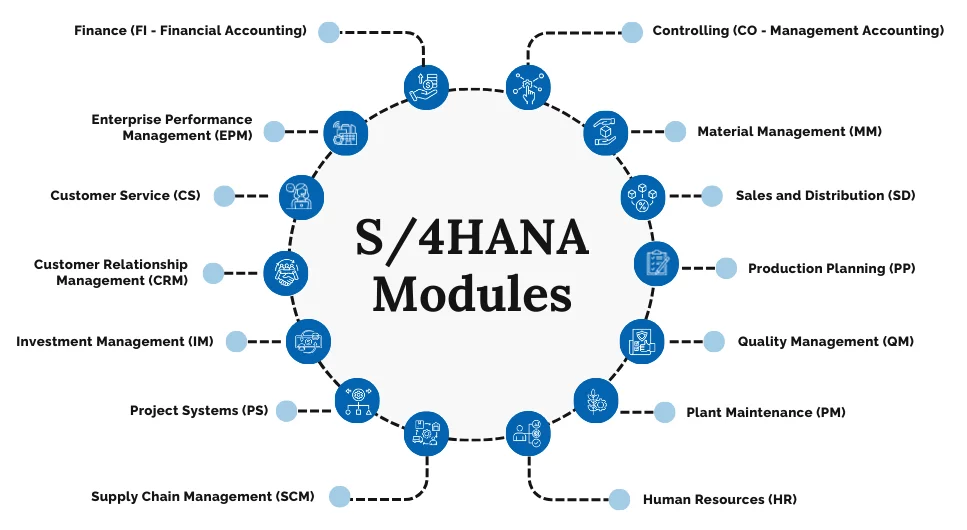
Organizations across industries are already using SAP automation to transform their operations. Invoice processing, payment authorizations and financial reports are all areas where finance departments may commonly implement automated solutions for processing their invoices. In many cases these areas have a large number of repetitive tasks that can be effectively managed through the use of automated work flows.
In procurement, companies automate supplier onboarding, purchase order approvals, and contract management. This reduces delays in procurement cycles and improves supplier collaboration. Supply chain teams also benefit from automation through automated inventory tracking, demand forecasting, and logistics coordination.
Human resources departments are another major adopter of automation. Employee onboarding, payroll processing, and leave management can all be automated within SAP systems. This not only improves efficiency but also enhances the employee experience by reducing administrative friction.
Customer service operations also benefit significantly. Automation can streamline ticket management, order processing, and customer communication workflows, enabling faster responses and improved customer satisfaction.
These examples demonstrate that SAP automation is not limited to a single department. Instead, it acts as a cross-functional capability that enhances operational performance across the entire organization.
Conclusion
As businesses continue to digitize their operations, automation has become a key pillar of enterprise transformation. SAP Automation enables organizations to streamline repetitive tasks, improve efficiency, and maintain consistent processes across complex enterprise environments. When combined with SAP Process Automation, businesses can design structured workflows that eliminate manual bottlenecks and accelerate operations.
Taking this a step further, SAP Hyperautomation introduces a more advanced approach by combining technologies such as AI, RPA, and low-code tools to automate end-to-end processes. This strategic automation framework allows organizations to continuously discover, optimize, and scale automated workflows across departments.